Can Female Cats Spray After Being Spayed?
Quick Answer
Yes, about 5% of spayed female cats may continue spraying. This is usually due to learned behavior, stress, or rarely, hormonal remnants. Most spayed females (95%) never spray.
of spayed females spray
success rate
weeks for hormones to clear
behavioral vs medical
The Truth About Spaying and Spraying
✅What Spaying Does
- •Removes ovaries and uterus
- •Eliminates heat cycles
- •Reduces hormone-driven behaviors
- •Prevents pregnancy
- •Reduces spraying in 95% of cases
⚠️What Spaying Doesn't Do
- •Doesn't erase learned behaviors
- •Doesn't stop stress-induced spraying
- •Doesn't fix territory disputes
- •Doesn't cure medical issues
- •Takes time to show full effects
Important Timeline
After spaying, it takes 6-8 weeks for all reproductive hormones to leave your cat's system. During this time:
- Some spraying may continue initially
- Gradual behavior improvement is normal
- Be patient and consistent with training
- Don't assume the surgery "didn't work"
6 Reasons Why Spayed Cats Still Spray
Understanding why your spayed cat continues to spray is crucial for finding the right solution:
Why Behavior Persists Without Hormones
When spayed females continue spraying, it's typically behavioral rather than hormonal.
Learned Behavior
If spraying started before spaying, it can become a habit that continues
Stress & Anxiety
Environmental stressors trigger spraying regardless of hormonal status
Territory Issues
Competition with other pets or outdoor cats visible through windows
Medical Problems
UTIs, bladder stones, or pain can cause spraying-like behavior
Incomplete Spaying
Rare cases of ovarian remnant syndrome leave hormone-producing tissue
Timing of Spay
Cats spayed after first heat more likely to continue spraying
The Multi-Cat Factor
Research shows cats in multi-cat households are significantly more likely to spray, even after spaying.
- • Competition for resources
- • Social hierarchy disputes
- • Territorial overlap stress
- • Limited escape routes
🔬 Ovarian Remnant Syndrome
In rare cases (less than 1%), a small piece of ovarian tissue may be left behind during surgery. This can produce hormones and cause:
- • Return of heat-like behaviors
- • Attraction of male cats
- • Hormonal spraying patterns
- • Vocalization and restlessness
Diagnosis requires blood tests or exploratory surgery. Treatment involves removing the remnant tissue.
Myths vs Facts About Spaying and Spraying
❌ Myth:
Spaying always stops spraying immediately
✅ Fact:
It can take 6-8 weeks for hormones to fully leave the system
❌ Myth:
Only intact females spray
✅ Fact:
5% of spayed females continue to spray, though less than intact cats
❌ Myth:
If a spayed cat sprays, the surgery failed
✅ Fact:
Most post-spay spraying is behavioral, not hormonal
❌ Myth:
Older cats won't benefit from spaying
✅ Fact:
Spaying helps at any age, though earlier is more effective
❌ Myth:
Spraying means the cat is in heat
✅ Fact:
Spayed cats can't go into heat but may spray for other reasons
How Age at Spaying Affects Spraying Risk
| Age at Spaying | Post-Spay Spraying Rate | Prevention Effectiveness |
|---|---|---|
| Before 6 months | 1% | Excellent |
| 6-12 months | 3% | Very Good |
| 1-2 years | 5% | Good |
| 2-5 years | 8% | Moderate |
| Over 5 years | 10% | Variable |
Best Practice
Veterinarians recommend spaying female cats before their first heat cycle (around 5-6 months) for maximum behavioral benefits. Early spaying results in only 1% of cats developing spraying behavior.
Treatment Options for Spayed Cats That Spray
Step 1: Veterinary Evaluation
First, rule out medical causes:
- • Complete physical examination
- • Urinalysis to check for infection
- • Blood work for hormonal issues
- • Imaging if ovarian remnant suspected
Step 2: Environmental Management
Proven strategies that work:
Litter Box Optimization
- • One box per cat plus one extra
- • Daily scooping, weekly full changes
- • Unscented, fine-texture litter
- • Boxes in quiet, accessible locations
Stress Reduction
- • Identify and remove triggers
- • Block visual access to outdoor cats
- • Provide vertical territory (cat trees)
- • Create separate resource stations
Step 3: Pheromone Therapy
Feliway studies show 74-97% of cats showed decreased marking.
- • Plug-in diffusers in marked rooms
- • Spray on cleaned areas after enzyme treatment
- • MultiCat formula for household tensions
- • Requires 2-4 weeks to see effects
Step 4: Behavioral Medication
When environmental changes aren't enough:
Fluoxetine (Prozac)
- • 70%+ reduction in spraying
- • Takes 4-8 weeks for full effect
- • Well-tolerated in cats
Clomipramine
- • 80% show ≥75% reduction
- • Faster acting (2-4 weeks)
- • Good for anxiety-based spraying
Buspirone
- • Helps 55% of cats reduce spraying
- • Increases confidence in timid cats
- • Non-sedating option
Step 5: Behavioral Modification
Professional help may include:
- • Identifying specific triggers
- • Desensitization protocols
- • Environmental enrichment plans
- • Inter-cat relationship improvement
Treatment Options Comparison
Environmental Management
70%
success rate
Results in 1-2 weeks
- •Remove stressors and triggers
- •Add resources (litter boxes, food stations)
- •Block visual access to outdoor cats
- •Create safe zones and vertical territory
Pheromone Therapy
60%
success rate
Results in 2-4 weeks
- •Feliway diffusers in problem areas
- •Spray pheromones on marked spots
- •Calming collar with pheromones
- •Multi-cat harmony formulas
Behavioral Modification
80%
success rate
Results in 2-3 weeks
- •Positive reinforcement training
- •Redirecting to appropriate behaviors
- •Increasing play and enrichment
- •Establishing consistent routines
Medical Intervention
90%
success rate
Results in 1-4 weeks
- •Rule out medical causes first
- •Anti-anxiety medications if needed
- •Hormone testing for ovarian remnants
- •Pain management if applicable
🎯 Combined Approach = Best Results
Using multiple treatment methods together increases success rate to over 90%. Most effective combination:
- 1.Rule out medical issues with vet exam
- 2.Clean all marked areas with enzyme cleaner
- 3.Add pheromone diffusers to problem areas
- 4.Implement environmental changes
- 5.Start positive reinforcement training
Real Success Stories
Luna, 3 years old
"Spayed at 2 years, continued spraying for 3 months. Solution: Feliway + extra litter boxes"
Result: Stopped completely in 2 weeks
Bella, 5 years old
"Late spay, stress from new baby. Solution: Safe zones + calming supplements"
Result: 90% reduction in 3 weeks
Misty, 7 years old
"Medical issue (UTI) after spay. Solution: Antibiotics + behavior modification"
Result: Complete resolution
Recommended Products for Post-Spay Spraying
These products are specifically helpful for spayed cats that continue to spray:
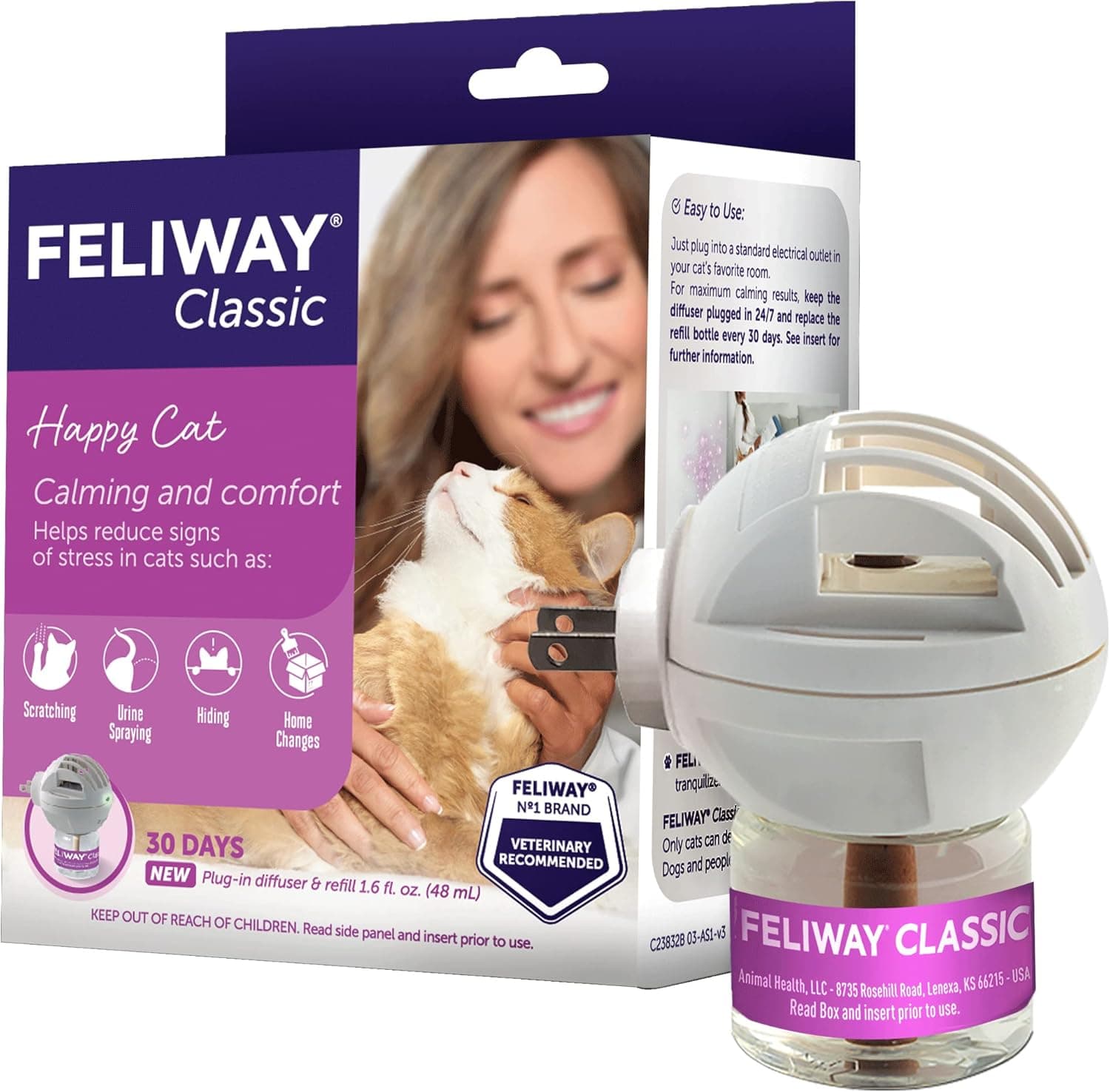
Feliway Classic Diffuser

Pet Remedy Natural Calming Spray

Frequently Asked Questions
Don't Give Up Hope!
Even though your spayed cat is still spraying, there's a 95% chance we can solve this problem. The key is identifying the underlying cause and using the right combination of solutions.
Related Articles
Do Female Cats Spray? The Surprising Truth
Yes, female cats can spray, though it's less common than in males. Learn why female cats spray, how to identify it, and proven solutions to stop the behavior.
Why Is My Female Cat Spraying? 7 Common Causes
Discover the 7 most common reasons why female cats spray, from heat cycles to stress. Get an interactive checklist and targeted solutions for each cause.
Female vs Male Cat Spraying: Key Differences
Compare female and male cat spraying patterns, frequency, smell intensity, and treatment approaches. Includes detailed comparison tables and gender-specific solutions.